


Trek Checkpoint+ Buyer Guide UK (2026) | SL 5 vs SL 6 AXS vs SL 7 AXS Comparison
The electric gravel bike for riders who love the back lanes — not the bike park.

Not every ride needs a mountain bike. If you spend most of your time on back lanes, bridleways, towpaths, and the kind of road surfaces that make your fillings rattle, the Checkpoint+ is built for exactly that. It's Trek's first electric gravel bike — and it fills a gap that's been wide open for a while. Too rough for a road bike. Not rough enough for an e-MTB. Sound familiar? That's where this bike lives.
You can see the current bikes available in our Trek Checkpoint+ range here →
All three Checkpoint+ models share the same carbon frame, the same TQ HPR60 motor, and the same 360Wh battery. The differences come down to shifting, wheels, and whether you want a suspension fork up front. This guide will help you work out which one suits how you actually ride.
Checkpoint+ SL 5 vs SL 6 AXS vs SL 7 AXS
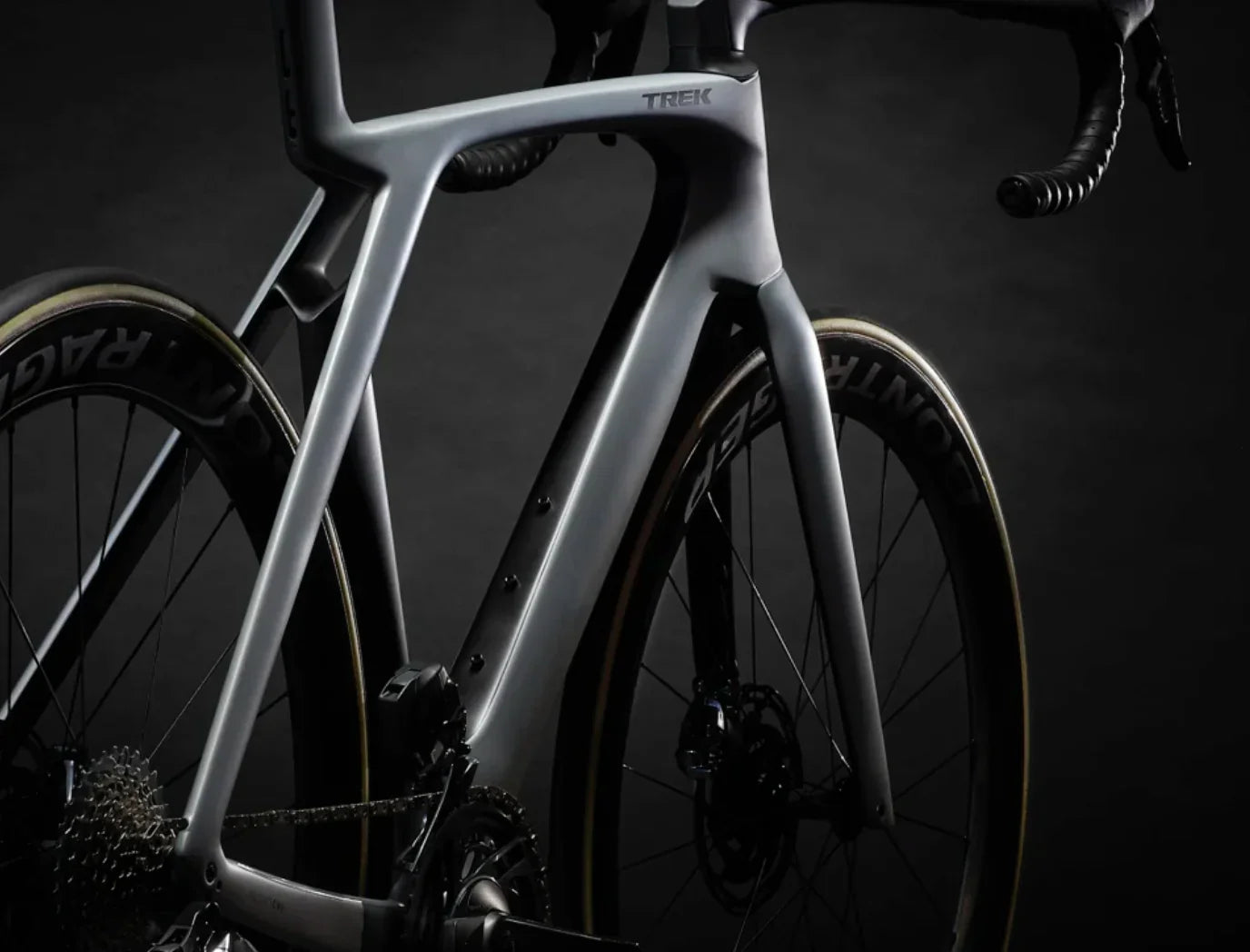
The Checkpoint+ is a proper gravel bike with an electric assist — not a road bike with bigger tyres and not a stripped-down e-MTB. It's built on the same geometry as the acoustic Checkpoint, with Trek's IsoSpeed rear decoupler smoothing out the rough stuff and clearance for tyres up to 50mm. The TQ HPR60 motor is whisper-quiet and gives you 60Nm of torque — enough to flatten a South Downs climb without feeling like you're on a motorbike. At around 13.7–14kg, it's roughly 10kg lighter than a full-power e-MTB like the Powerfly+ or Rail+. That matters more than you'd think.
Where the three bikes differ is components, not character. The SL 5 and SL 6 AXS both run rigid carbon forks and alloy wheels — the step up from SL 5 to SL 6 is mechanical shifting to wireless electronic. The SL 7 AXS is the one that stands apart: it adds a 40mm RockShox Rudy suspension fork and carbon wheels, which changes how the bike handles rougher ground. All three feel like the same bike at their core — the SL 7 just has more composure when the surface gets ugly.

SL 5
Best for: Riders who want a capable electric gravel bike without paying for features they might not need — and who don't mind shifting with a lever rather than a button.
Ride feel: Light and direct. The rigid fork gives sharp, immediate steering feedback and the mechanical Shimano GRX shifting is crisp and reliable. Without the suspension fork or carbon wheels, this is the leanest Checkpoint+ — and some riders will prefer that simplicity. You feel the road surface more through the bars than on the SL 7, but IsoSpeed still takes the worst of it out through the saddle.

SL 6 AXS
Best for: Riders who want wireless shifting and the cleanest possible cockpit — without the weight or cost of a suspension fork they might not use.
Ride feel: Almost identical to the SL 5 from the saddle, but the SRAM wireless shifting makes a noticeable difference to how the bike feels in use. No cables to stretch or adjust, gear changes happen with a light button press, and the cockpit looks cleaner. It's £500 more for what's effectively a usability upgrade — and for riders who've used electronic shifting before, it's hard to go back.

SL 7 AXS
Best for: Riders who regularly tackle rougher lanes, chalk tracks, and longer days where hand fatigue becomes a factor — and want a bike that handles all of it without compromise.
Ride feel: The 40mm RockShox Rudy fork changes the front end noticeably. On broken tarmac and rough gravel, the bike tracks straighter and your hands take less punishment — it's the difference between gripping on and floating over. The carbon wheels shed a bit of rotating weight, and the SRAM Force shifting is a step up in refinement. It's the most composed of the three on genuinely rough ground, and one of very few lightweight e-gravel bikes that pairs a suspension fork with a sub-14.5kg build.
The SL 5 is the smart entry point — same frame, same motor, same battery, proven mechanical shifting. The SL 6 AXS is the sweet spot for riders who value wireless convenience. The SL 7 AXS is for riders who push into rougher terrain and want the bike to absorb more of it. None of these is a compromise — they're the same bike built to three different priorities.
Start With How You Ride
Not sure which Checkpoint+ suits you? Three questions should get you there.
These aren't about specs — they're about how you actually ride and what matters most to you on a typical day out.
What kind of surfaces do you ride most?
Think about your last few rides. Were you mostly on lanes, towpaths, and light gravel — or were you regularly hitting rougher tracks, chalk paths, and rutted bridleways?
If your rides are mostly smooth-ish with the occasional rough stretch, the rigid fork on the SL 5 or SL 6 handles that comfortably — IsoSpeed and wider tyres do more than you'd expect. If you're regularly on broken ground or spending three-plus hours on mixed surfaces, the SL 7's suspension fork starts earning its keep.
→ Mostly lanes and light gravel → SL 5 or SL 6 AXS. Regularly rougher ground → SL 7 AXS.
How much does shifting convenience matter to you?
Mechanical shifting works. It's reliable, it's simple, and it costs less. But if you've used wireless electronic shifting before — or you like the idea of a clean cockpit with no cables — it's a hard thing to go back from.
The jump from SL 5 to SL 6 AXS is entirely about shifting. Same fork, same wheels, same frame. If you're spending £4,500 already and you value that wireless convenience, the extra £500 is one of the more justifiable upgrades in the range.
→ Happy with mechanical → SL 5. Want wireless → SL 6 AXS or SL 7 AXS.
Are you likely to upgrade or add accessories later?
The SL 5 and SL 6 are both compatible with aftermarket suspension forks — but fitting one later means a fork swap, brake bleed, and setup cost. If you know you want suspension, it's significantly cheaper and easier to buy the SL 7 with it fitted from the factory.
If you're more likely to add bags, mudguards, or a range extender than swap the fork, the SL 5 or SL 6 gives you a lower starting price with plenty of room to build from. All three have the same mounting points for racks, bags, and mudguards.
→ Want suspension from day one → SL 7 AXS. Prefer to start simple and add accessories → SL 5 or SL 6 AXS.
Model Breakdown
SL 5
Everything you need. Nothing you don't.

The SL 5 is the proof that you don't have to spend top money to get the full Checkpoint+ experience. Same carbon frame, same motor, same battery — the savings come from mechanical shifting and alloy wheels, which for most riders won't limit what this bike can do.
Key Points
- Shimano GRX 12-speed mechanical shifting — proven, reliable, easy to maintain and adjust at home or in any bike shop.
- Available in two colourways (the other two models get one each) — more choice at the entry point.
- Sizes XS to XL — the widest size range in the Checkpoint+ lineup (the SL 7 starts at S due to the suspension fork).
- Same TQ HPR60 motor and 360Wh battery as the top-spec SL 7 — no compromises on the electric system.
Who it suits
Riders stepping into electric gravel for the first time, or experienced cyclists who value simplicity and reliability over bells and whistles. If you'd rather spend the savings on a range extender, bags, or better tyres, the SL 5 gives you that flexibility.
SL 6 AXS
The upgrade that changes how the bike feels in your hands.

The SL 6 AXS is the middle child that earns its place. For £500 more than the SL 5, you get SRAM's wireless electronic shifting — no cables to maintain, no barrel adjusters, instant shifts at a button press. Everything else stays the same, which is exactly the point. It's a targeted upgrade where you'll notice it most.
Key Points
- SRAM Rival/GX Eagle AXS wireless 12-speed — electronic shifting with no cable maintenance.
- Same rigid carbon fork and alloy wheels as the SL 5 — keeping the build clean and light.
- Cockpit is noticeably tidier without shift cables — looks better, less to snag or replace.
- Compatible with aftermarket suspension forks if you decide you want one later.
Who it suits
Riders who've either used electronic shifting before and won't go back, or anyone who wants the cleanest possible build without stepping up to the SL 7's price. It's the bike most people will be happiest with long-term.
SL 7 AXS
The rougher the road, the more this bike makes sense.

The SL 7 AXS is what happens when you build a lightweight e-gravel bike for genuinely mixed terrain. The RockShox Rudy suspension fork smooths out the stuff that rigid forks just pass straight through to your hands, and the carbon wheels cut rotating weight where it matters most. It's still under 14.5kg — comfortably in lightweight e-gravel territory — which makes it unusual. Most e-gravel bikes with suspension forks weigh significantly more.
Key Points
- 40mm RockShox Rudy XPLR suspension fork — tuneable air spring, rebound adjustment, real suspension that earns its place on rough ground.
- Bontrager Aeolus Elite 35V carbon wheels — lighter, stiffer, and more responsive than the alloy wheels on the SL 5 and SL 6.
- SRAM Force AXS 13-speed wireless drivetrain — the widest gear range in the lineup and the most refined shifting.
- Available S to XL only — the suspension fork means no XS size.
Who it suits
Riders who regularly venture onto rougher terrain — chalk paths, rutted tracks, broken lanes — and want a bike that absorbs it rather than transmitting it. If you're doing longer days where hand and arm fatigue creeps in, the suspension fork is a genuine comfort advantage, not a gimmick.
Electric gravel vs electric road — why the Checkpoint+ isn't just a Domane+ with bigger tyres
One of the most common questions we get is "Do I actually need an electric gravel bike, or would an electric road bike do?" It's a fair question — especially when Trek already makes the Domane+, which can fit tyres up to 38mm and has its own version of IsoSpeed. On paper, both bikes have a motor, both have drop bars, both smooth out the road. So what's the difference?
The short answer: a lot more than tyre width. The Checkpoint+ is designed from the ground up for surfaces that would have a road bike struggling — and on the South Downs, that means most of the interesting routes. But the longer answer gets into weight, durability, geometry, and why the Checkpoint+ might actually be the smartest e-bike for riders who don't want an e-MTB.

It's about where you can actually go
The Domane+ tops out at 38mm tyres. The Checkpoint+ takes up to 50mm. That's not a minor difference — it's the difference between sticking to tarmac and clean gravel versus confidently riding chalk tracks, towpaths, rutted lanes, and the kind of broken surfaces that are everywhere on the South Downs. The Checkpoint+ also sits you slightly higher with a longer wheelbase, so it's more stable over rough ground. And the frame has carbon armour on the down tube for stone strikes — because gravel throws things at your bike. The Domane+ is a brilliant electric road bike that can do a bit of gravel. The Checkpoint+ is a gravel bike that can do plenty of road. If your riding is 70% lanes and 30% rougher surfaces, the Checkpoint+ handles that split without compromise. A Domane+ will be fine for the road sections but will feel out of its depth — and out of its tyre clearance — when the surface deteriorates.
10kg lighter than an e-MTB — and that changes everything
Here's the thing most people don't consider: the Checkpoint+ weighs around 13.7kg. A Powerfly+ is around 23–24kg. A Rail+ is similar. That's a 10kg difference — and you feel every gram of it when you're riding on the road, lifting the bike over a gate, loading it into the car, or just leaning it against a wall. For riders who want to explore the South Downs back lanes — which are rough, potholed, and often awful — but aren't riding technical singletrack, an e-MTB is overkill. You're carrying 10kg of suspension travel and tyre width you don't need. The Checkpoint+ gives you the assist, the comfort (via IsoSpeed and up to 50mm tyres), and the durability for those surfaces, without the weight penalty. We've even done a flat bar conversion on a Checkpoint+ in the shop — swap the drops for flat bars and it becomes one of the lightest, most capable e-hybrids on the market. That's how versatile this platform is.
The motor difference matters too
The Domane+ still uses the older TQ HPR50 motor — 50Nm of torque and 300W peak power. The Checkpoint+ gets the newer HPR60, which bumps that to 60Nm and 350W. The HPR60 is noticeably stronger at lower pedalling speeds, which is exactly where you want more help — grinding up a chalky climb or pushing through a headwind on an exposed ridge. The battery is the same 360Wh in both bikes, with an optional 160Wh range extender that adds roughly 44% more range. Realistically, on the South Downs in mixed assist modes, expect 30–40 miles from the internal battery — enough for most rides, but worth adding the extender if you're planning full-day loops. Both motors cut out at 25km/h in the UK, so above that speed you're on your own legs either way. The difference is in how much help you get below that threshold — and the HPR60 gives you meaningfully more.
Why Buy From All Ride Now?
We've been a Trek partner for 15 years. We know these bikes because we sell them, build them, service them, and ride them on the same roads and lanes you will.
Buying an electric gravel bike isn't like buying a pair of shoes online. The motor system, the battery, the electronics — these need professional setup, proper registration, and someone local who can help when something needs attention.

Why All Ride Now
When you buy from us:
- We know the Checkpoint+ range inside out — we've sold all three models and can walk you through exactly which one suits your riding.
- Every bike leaves the shop professionally built and checked.
- TQ motor servicing and diagnostics in-house — we have the tools and the knowledge to support the electronics long-term.
- We're on the South Downs. We ride these roads. When we tell you what tyres to run or which routes suit this bike, it's from experience, not a spec sheet.
Whether you buy in the shop or online, you get the same level of advice, setup, and aftercare.
Frequently Asked Questions
Can I use the Checkpoint+ for commuting?
Absolutely. With mudguard mounts, rack mounts, and integrated lighting compatibility, it's a seriously capable commuter — and at 13.7kg with a quiet motor, it's lighter and more practical than most dedicated e-commuter bikes. The flat bar conversion we've done in the shop takes it even further into commuter territory.
Is the Checkpoint+ eligible for Cycle to Work?
Yes — all three models are available through most Cycle to Work schemes. At £4,500 to £6,500, they sit within the extended voucher limits that most providers now offer. We accept vouchers from all major providers. It's one of the most cost-effective ways to get into a premium electric gravel bike.
How long does the battery take to charge, and can I remove it?
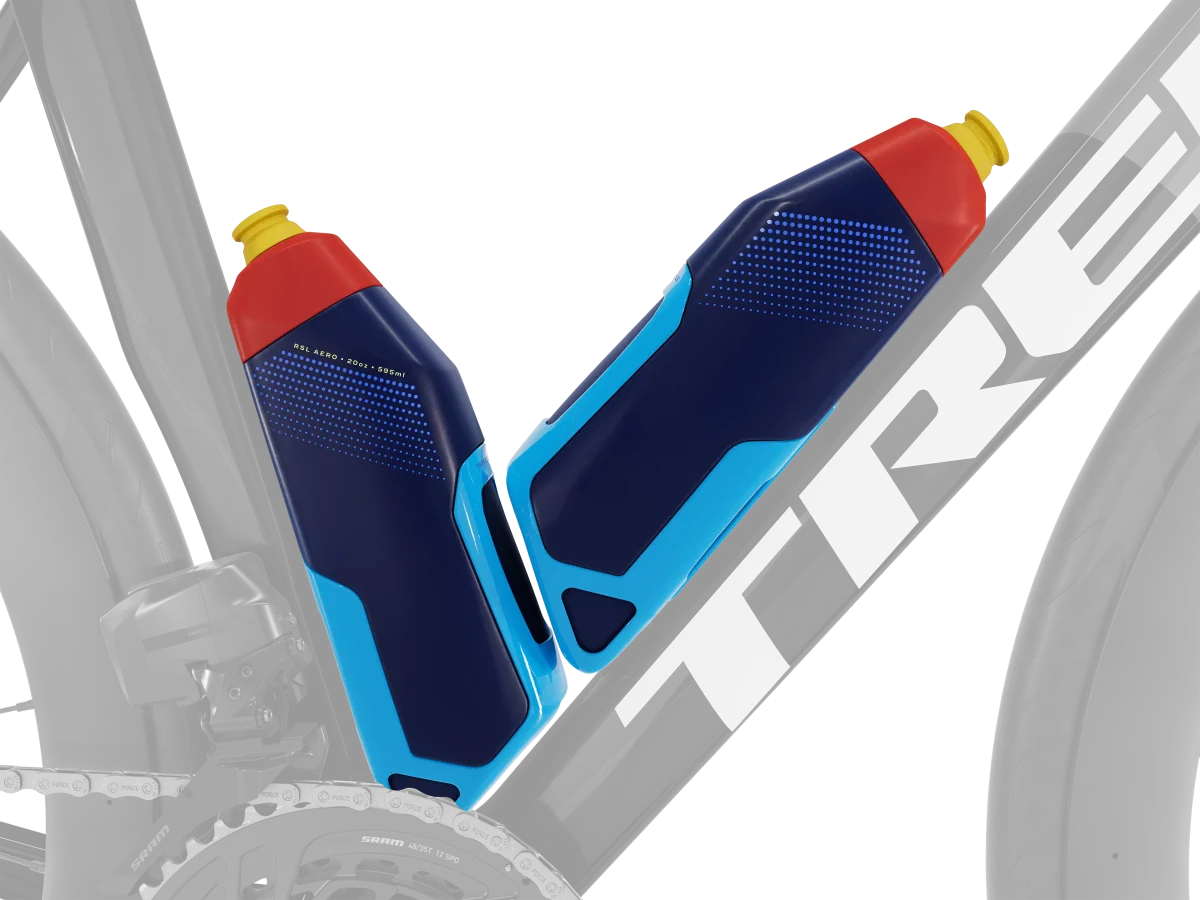
A full charge takes around 3 hours 45 minutes from empty. The battery is integrated into the down tube and isn't designed for regular removal — you charge it on the bike via a port on the frame. It can be accessed with tools for servicing, but this isn't a quick-swap system. For longer rides, the 160Wh range extender sits in a bottle cage and adds roughly 44% more range.
Can I ride it with the motor switched off?
Yes, and it rides well without assist — but you'll feel the extra weight compared to an acoustic Checkpoint (roughly 4kg heavier). For short rides or flatter routes, plenty of riders turn the motor off and save the battery for when they need it. The TQ system has no noticeable drag when it's off.
What's the warranty situation?
Trek's lifetime warranty covers the frame for as long as you own the bike. The TQ motor and battery are covered by a separate two-year warranty. We handle all warranty claims in-house — you deal with us, not a call centre.
Your Next Step
Browse the full Checkpoint+ range on our site and see which spec catches your eye.
Read more about how the Checkpoint+ compares to our other electric bikes — or explore our full range of Trek buyer guides.
Get in touch. Call, email, or pop into the shop in Midhurst. We'll help you work out which Checkpoint+ — or which bike entirely — is right for how you ride.
Got a question about the Checkpoint+?
Call us on 01730 817563
— or message us through the site. No hard sell, just honest advice.