
Gravel Bikes: White Elephant or Diamond in the Rough?

"I wasn't sold on gravel bikes for a long time. They felt like a solution looking for a problem. Then I started riding the back lanes around the South Downs on one and it just clicked. This spring we've sold more gravel bikes than any other category. That's not hype — that's riders figuring out what I figured out."
— Dan, All Ride Now
The Buzz That Wouldn't Go Away
Gravel bikes have been "the next big thing" for about a decade now. And for most of that time, I'd nod politely when reps talked about them, then point customers towards whatever they actually came in for.
The problem wasn't the bikes. It was the pitch. "Do everything, go anywhere" sounds brilliant until you realise it also sounds like marketing for a Swiss Army knife — technically true, but you'd still rather have a proper screwdriver.
So what's changed? Why have we sold more gravel bikes this spring than in any autumn or winter before — the seasons when gravel is supposed to be king?
Why Gravel Bikes Are Having Their Moment — Right Now
The gravel market is growing globally at somewhere between 6 and 8 percent a year. But the numbers don't tell the real story. What's happening in the shop is more interesting.
The people buying gravel bikes from us this spring aren't gravel racing converts or adventure cycling obsessives. They're road riders who've had enough of dodging potholes. They're commuters who want one bike that handles the towpath and the A-road. They're riders in their 40s, 50s and 60s who want to see the views from the back lanes without worrying about pinch flats on a 25mm tyre.
Britain's roads are in the worst state they've been in for years. The maintenance backlog has hit nearly £17 billion. Over 250 cyclists have been killed or seriously injured by road defects since 2017. That's not background noise — that's the lived experience of anyone who rides around here regularly. The lanes between Midhurst and Petworth, the back roads over to Harting, the bridleways across the Downs — these are surfaces that punish a road bike and barely register on a gravel bike.
And the bikes themselves have caught up with the idea. The early gravel bikes were compromises in both directions — too sluggish for the road, too fragile for proper off-road. The current generation is different. The geometry has matured, the components are gravel-specific rather than borrowed from road or mountain bikes, and the tyre clearance has widened to the point where you can genuinely tailor the ride to whatever you're doing that day.
What We've Been Selling — And Why
Rather than give you a generic buyer's guide, let me show you the actual bikes that have left the shop this spring. Each one tells a different story about why gravel works.
Trek Checkpoint ALR 3 Gen 3 — £1,200

The Checkpoint ALR 3 outside All Ride Now, Midhurst — where more than a few of these have found new homes this spring.
This is where it starts. The Checkpoint ALR 3 is the entry point to Trek's gravel range and it's genuinely impressive for the money. You get a 300 Series Alpha Aluminium frame with a full carbon fork — which at this price point is doing a lot of heavy lifting in terms of ride quality. The carbon fork soaks up road chatter in a way that an alloy fork simply can't, and it keeps the front end light.

The carbon fork and clean internal cable routing are details you'd expect at a higher price point.
The shifting is 10-speed Shimano CUES U6000 with mechanical disc brakes. Are mechanical discs as refined as hydraulic? No. But they're reliable, easy to maintain, and a genuine step up from rim brakes in the wet. The Bontrager Paradigm wheels are tubeless-ready, paired with Bontrager Girona Pro tyres, and there's clearance for up to 50mm rubber if you want to go wider.

Clearance for up to 50mm tyres means you can run proper gravel rubber without any compromise.
The real selling point at this level is the frame itself. It has the same updated Gravel Endurance geometry as the carbon Checkpoints — a higher stack and shorter reach that puts you in a more upright, comfortable position. And it's covered in mounts: racks, mudguards, frame bags, fork cages. This is a bike you can dress up for a weekend tour or strip back to a fast all-road machine.
Who it's for: Someone dipping into gravel for the first time, or a commuter who wants a bike that handles everything from tarmac to towpath without fuss. At £1,200, it's a lot of bike.
Trek Checkpoint ALR 4 Gen 3 — £1,400
The ALR 4 is the sweet spot in the aluminium range. For an extra £200 over the ALR 3, you jump to 11-speed Shimano CUES U8000 and — crucially — hydraulic disc brakes. That's a significant upgrade. Hydraulic brakes feel completely different to mechanical ones: less effort at the lever, more modulation, more consistent in the wet. Once you've ridden hydraulic discs, you don't go back.
Everything else carries over: same Alpha Aluminium frame, same carbon fork, same 50mm tyre clearance, same mount-everything approach. But the hydraulic brakes alone justify the step up. If you're planning long rides across the Downs where you'll be braking repeatedly on loose descents, this is the one to go for.
The Equipped Checkpoint — What Versatility Actually Looks Like

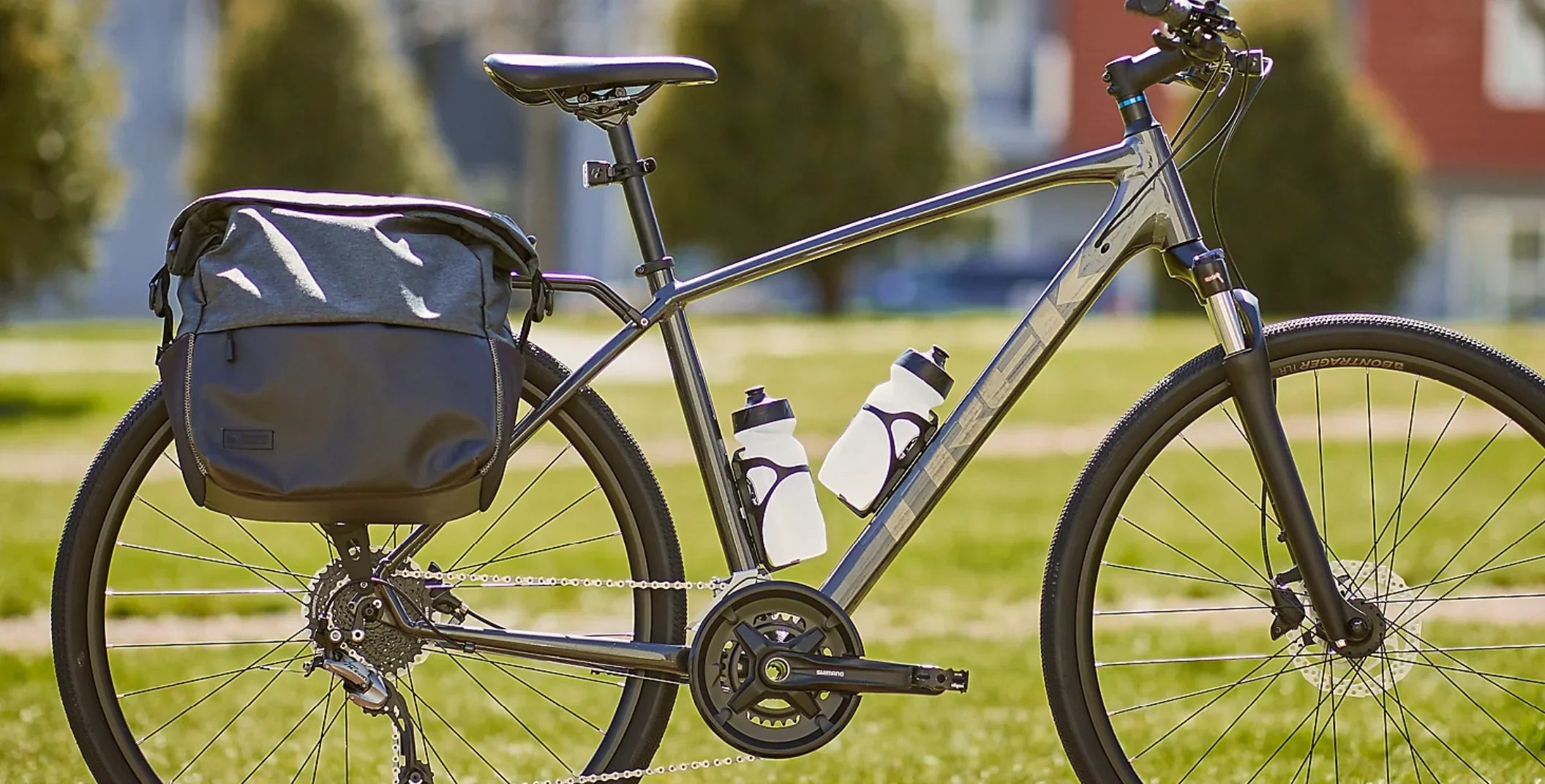
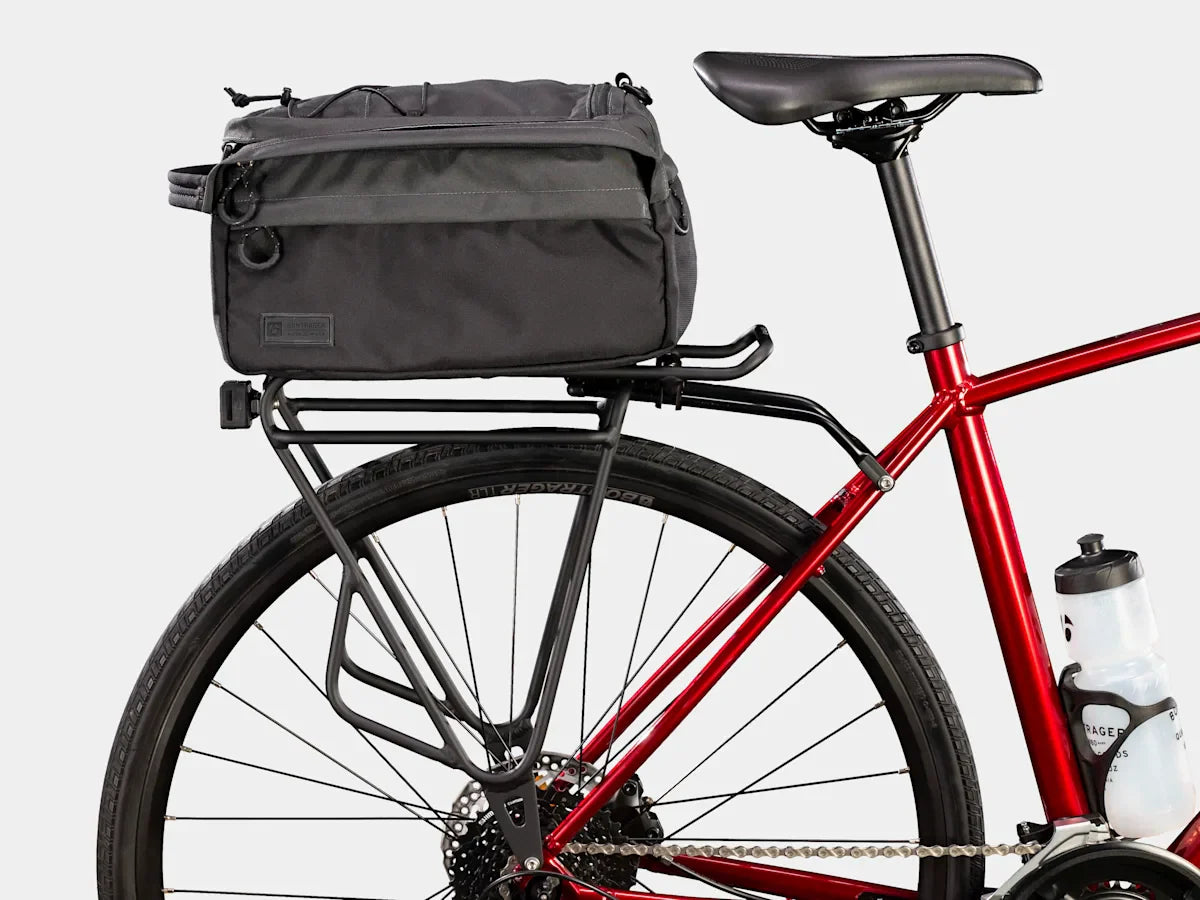
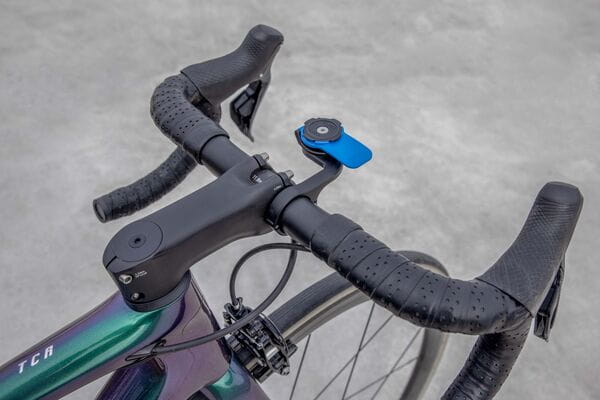
A Checkpoint ALR 4 kitted out with mudguards, pannier rack, Topeak trunk bag and Quadlock phone mount. From gravel bike to touring machine in ten minutes.
This is the bike that answers the "can it really do everything?" question. It's a Checkpoint ALR 4 that we kitted out with mudguards, a pannier rack, a Topeak trunk bag and a Quadlock phone mount. In ten minutes it went from a gravel bike to a fully equipped touring and commuting machine.
And this is the point that's hard to make with spec sheets alone. Those mounts on the Checkpoint frame aren't a gimmick — they're there because the bike was designed to adapt. Want to ride to work in January with full mudguards and a bag? Done. Want to strip it all off on Saturday morning and ride the gravel tracks across the Downs? Fifteen minutes with an Allen key.
Try doing that with a road bike. Or an MTB. The gravel bike sits in the middle and genuinely does both.
Trek Checkpoint SL 5 AXS Gen 3 — £2,900

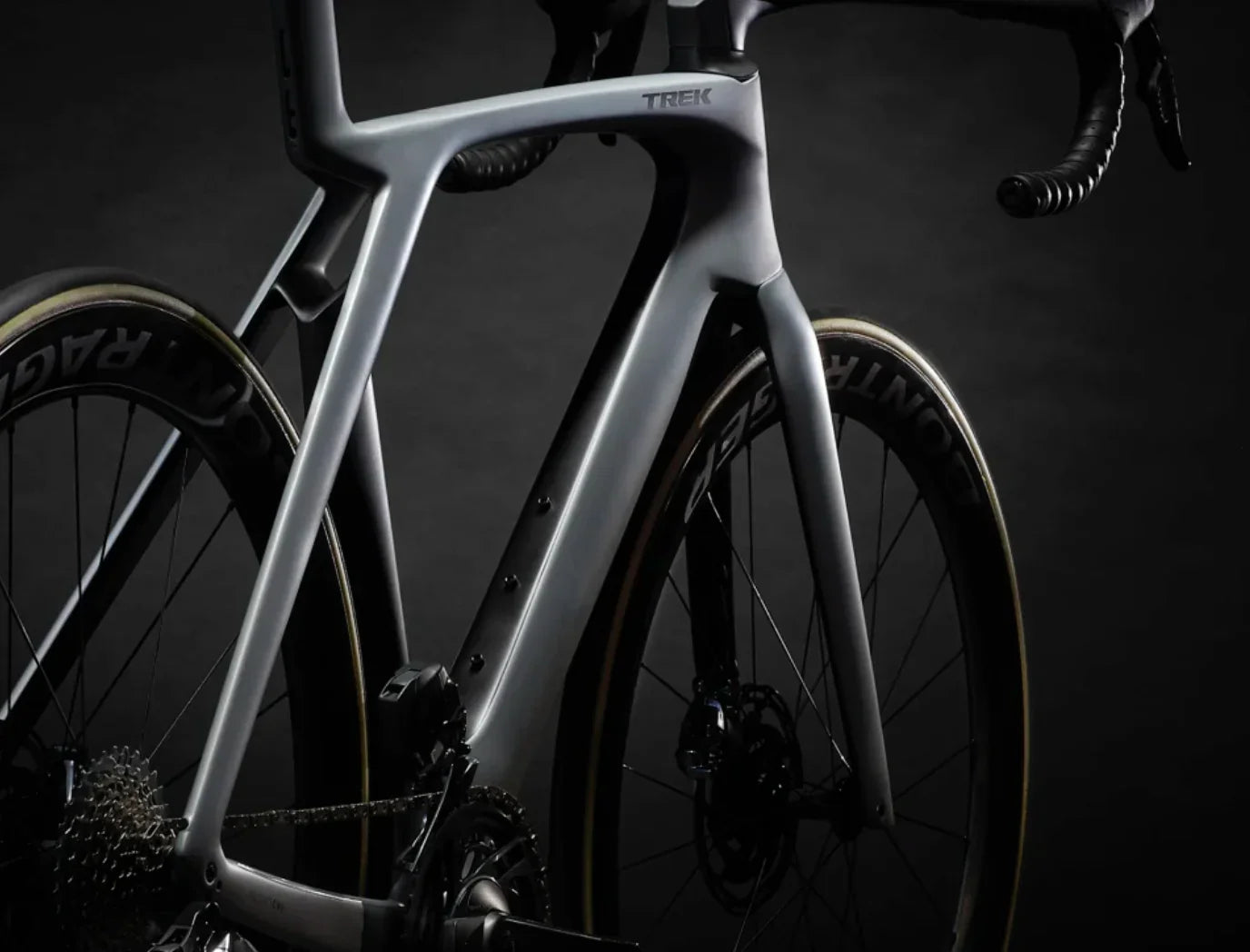
The Checkpoint SL 5 AXS — 500 Series OCLV Carbon, IsoSpeed decoupler, wireless SRAM shifting. Under 9.5kg.
Now we're into carbon territory. The SL 5 is built around Trek's 500 Series OCLV Carbon frame with IsoSpeed decoupler technology — a system that isolates road vibration at the seat tube junction so you feel less of the chatter and bumps that build up over a long ride. It's subtle but significant: after three hours on broken tarmac, the difference between a bike with IsoSpeed and one without is the difference between wanting to keep riding and wanting to stop.

SRAM Apex XPLR AXS — fully wireless, 12-speed, a button press and it's done. No cables to stretch, no indexing to drift.
The headline spec is the 12-speed SRAM Apex XPLR AXS drivetrain — fully wireless electronic shifting. No cables to stretch, no indexing to drift, just a button press and an instant, precise gear change every time. It's the kind of technology that used to be reserved for bikes costing twice this. At 9.5kg for a medium, this is a properly light bike that you can ride on the road and genuinely keep pace with road bikes, then drop onto a gravel track without changing anything.

The SL 5 alongside the equipped ALR 4 — two very different approaches, same fundamental versatility.
The SL 5 is for riders who've already decided gravel is their thing and want a bike that does it all at a high level. The carbon frame, electronic shifting, tubeless-ready Bontrager Paradigm SL wheels and 42mm Girona Pro tyres add up to something that feels genuinely fast without sacrificing any of the comfort or versatility that makes gravel bikes worth riding.
Who it's for: Experienced riders who want carbon performance, wireless shifting and IsoSpeed comfort. If you're doing big miles across mixed surfaces, this is the bike that makes every one of them feel easier.
Merida Silex 4000 — £2,250

The Merida Silex 4000 in Wild Honey — carbon frame, Shimano GRX, and a double chainset that gives you gears most gravel bikes can't match.
Not everything in the shop is Trek. The Merida Silex 4000 is a carbon gravel bike that takes a slightly different approach, and it's worth paying attention to.

Mountain-bike-inspired geometry with a long top tube and short stem — the Silex feels planted and confident off-road.
The big talking point is the 2x10 Shimano GRX drivetrain with a double chainset — a 46/30 up front paired with an 11-36 cassette. Most gravel bikes now run a single chainring (1x), which keeps things simple and eliminates the front derailleur. But a double gives you a wider overall gear range with smaller steps between gears, which matters if you're riding loaded or tackling proper climbs. It's unusual on a gravel bike at this level and it's one of the reasons this bike appeals to riders coming from a road background who are used to that close-ratio feel.
The Silex geometry is mountain-bike-inspired — long top tube, short stem, slightly slacker angles — which gives it a more planted, confident feel off-road than the Trek's road-influenced setup. It rolls on Reynolds G30 wheels with Maxxis Rambler 45c tubeless-ready tyres, and stopping comes from Shimano GRX hydraulic discs with 180mm rotors.
At £2,250, it sits between the Checkpoint ALR range and the SL 5 in price, but offers a carbon frame with a different character. If you want a gravel bike that leans a bit more towards off-road confidence and prioritises gear range over electronic simplicity, the Silex is worth a look.
The Honest Take
Here's what I think is actually driving the spring gravel boom, beyond the potholes and the market trends: people have stopped overthinking it.
For years, the conversation around gravel bikes was dominated by "what are they actually for?" — as if every bike needed a narrow, specific purpose. Road bikes are for the road. Mountain bikes are for mountains. Where does a gravel bike fit?
The answer, it turns out, is everywhere. And the riders who are buying them now aren't the ones who followed the hype early. They're the ones who resisted it, tried one eventually, and realised that having a bike that handles the tarmac, the towpath, the back lane and the bridleway without needing four different machines is just... sensible.
We're in the South Downs. The riding here is varied by nature — you can be on smooth tarmac, broken farmac, chalk track and flint bridleway in a single ride. A gravel bike doesn't just cope with that. It makes it the whole point.
White elephant or diamond in the rough? Neither. It's just a genuinely good bike. And people are finally catching on.
Quick Spec Comparison
| Checkpoint ALR 3 | Checkpoint ALR 4 | Checkpoint SL 5 AXS | Merida Silex 4000 | |
|---|---|---|---|---|
| Frame | Alpha Aluminium | Alpha Aluminium | 500 Series OCLV Carbon | Carbon |
| Fork | Full carbon | Full carbon | Full carbon | Merida Silex II carbon |
| Drivetrain | Shimano CUES 1×10 | Shimano CUES 1×11 | SRAM Apex XPLR AXS 1×12 | Shimano GRX 2×10 |
| Brakes | Mechanical disc | Hydraulic disc | Hydraulic disc | Hydraulic disc (180mm) |
| Tyres | Bontrager Girona Pro 42mm TR | Bontrager Girona Pro 42mm TR | Bontrager Girona Pro 42mm TR | Maxxis Rambler 45c TR |
| Max tyre clearance | 50mm | 50mm | 50mm | 45c (42c w/ mudguards) |
| Wheels | Bontrager Paradigm | Bontrager Paradigm | Bontrager Paradigm SL | Reynolds G30 |
| IsoSpeed | No | No | Yes | No |
| Electronic shifting | No | No | Yes (wireless) | No |
| Weight (approx.) | ~10.5kg | ~10.3kg | ~9.5kg | ~9.8kg |
| Price | £1,200 | £1,400 | £2,900 | £2,250 |
Talk to Dan
Gravel bikes are a conversation, not a catalogue purchase. The right one depends on where you ride, how far you ride, whether you want to load it up with bags or keep it stripped back, and what you're riding now. Come in, have a coffee, and let's work it out.
Tel: 01730 817563
All Ride Now, Midhurst, West Sussex